TECHNICAL INFORMATION

Get to know SPC.

Explore STONEKS SPC solutions, from material construction and applications to performance and technical documentation. Make an informed choice for your project.

Explore the material
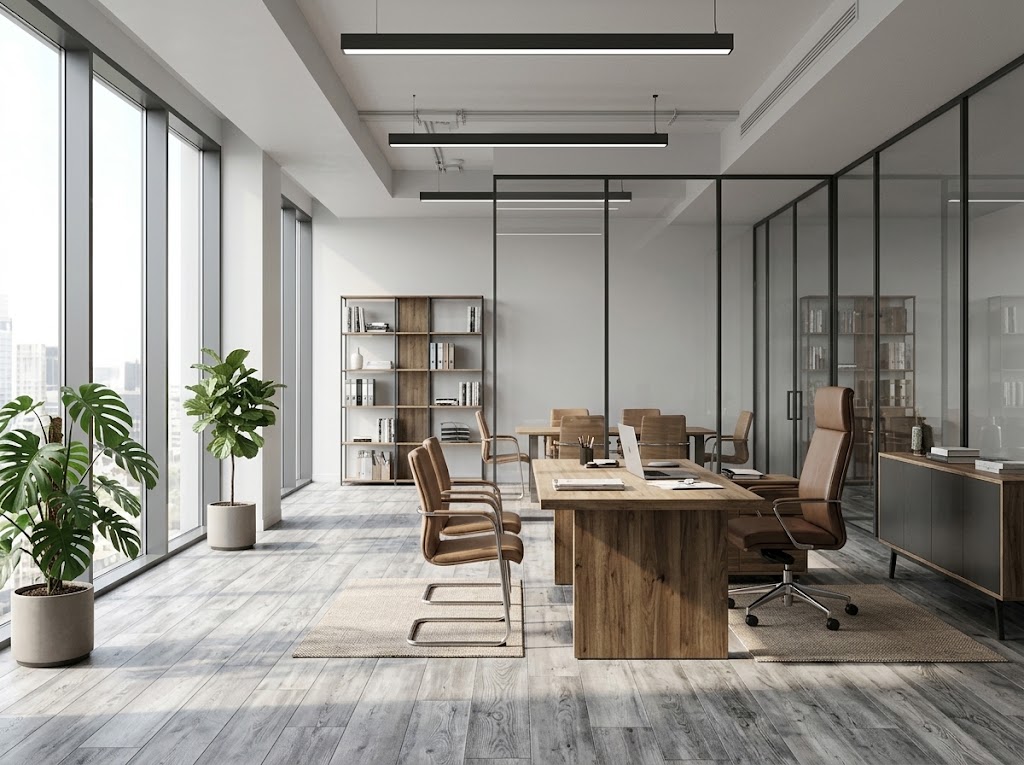
Bright office with wood-look SPC flooring
STONEKS / SPC

01 / THE MATERIAL

What is SPC?

SPC (Stone Polymer Composite) is a next-generation flooring material with a dense, rigid core, manufactured by combining natural limestone mineral and polymers through extrusion under heat and pressure.

The core consists primarily of natural calcium carbonate (limestone powder), PVC and stabilising components. This dense structure provides strength, impact and indentation resistance, water resistance and high dimensional stability.

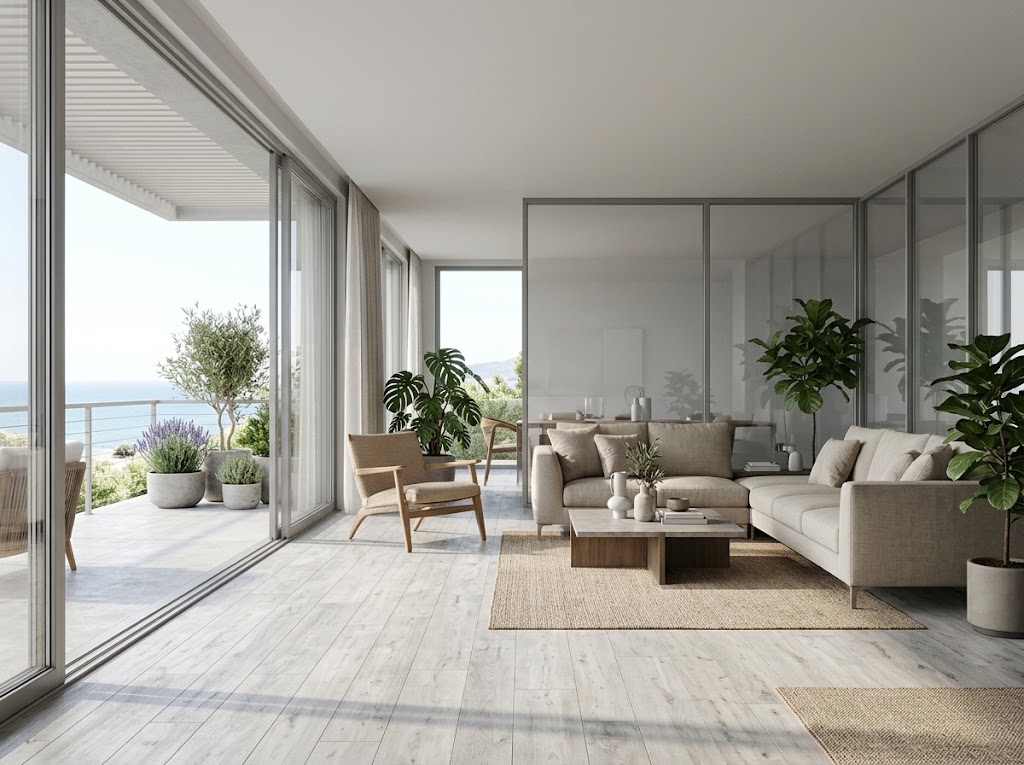
Sea-view living space with light-toned SPC flooring

STONEKS / SPC

The STONEKS SPC Difference

Dense core. Resilient surface. Lasting performance.

STONEKS SPC (Stone Polymer Composite) is manufactured in specialised extruders by combining approximately 70% natural limestone mineral with 30% virgin PVC, other minerals and stabilising components under heat and high pressure. The resulting dense, rigid composite core brings the strength of stone to modern flooring technology.

With a density of approximately 2,000 kg/m³, the Endurance Tech core provides structural strength and impact resistance. Its high density improves resistance to everyday impacts and point loads, while helping maintain dimensional stability as temperature and humidity change.

Ultimate Shield surface protection technology provides additional resistance to scratches, stains and wear. High-resolution decorative printing creates wood-grain and stone-textured surfaces that realistically reproduce the appearance of natural materials.

Every layer has a purpose.

STONEKS SPC flooring combines layers with distinct functions, from surface protection to acoustic comfort. Each layer contributes to the floor’s appearance, durability, structural stability or comfort in use.

12345
STONEKS / SPC5-LAYER STRUCTURE
  1. Ultimate Shield surface protection

    Specialised UV coating technology provides additional protection against scratches, stains and everyday surface wear. It helps preserve the floor’s appearance and simplify maintenance.

  2. Transparent wear layer

    A durable, transparent layer that protects the decorative surface against the effects of intensive use. Depending on the model, it is available in 0.30 mm (12 mil) or 0.55 mm (22 mil). The appropriate thickness is selected according to the application and traffic level.

  3. Ultra HD decorative film

    High-resolution printing creates the colour, grain and visual character of wood or natural stone. Combined with the surface texture, it realistically reflects the appearance and feel of natural materials.

  4. Rigid SPC core

    The mineral and polymer composition provides structural rigidity and dimensional stability.

  5. IXPE underlay

    In models with an integrated underlay, it contributes to walking comfort and reduced impact noise.

Illustration of SPC flooring layers with IXPE underlay. Wall panels and profiles have different constructions.

WHERE CAN IT BE USED?

Choose the right product for your space.

SPC flooring can be used across a wide range of spaces, from homes and hotels to offices and educational facilities. The right choice depends on traffic levels, wear layer thickness, the subfloor and conditions of use.

Residential

Creates a consistent wood-look finish across living rooms, bedrooms, children’s rooms, corridors and entrance halls. Its water-resistant core also makes it an option for areas exposed to splashes, such as kitchens. A 0.30 mm (12 mil) wear layer with an IXPE underlay is a common residential choice.

Hotels & hospitality

Suitable for consideration in hotel rooms, corridors and reception areas. Rooms, corridors, bathrooms, restaurants and lobbies within the same hotel may require different flooring systems. Models with a 0.55 mm (22 mil) wear layer are a key option for intensive commercial use.

Offices

Suitable for private offices, meeting rooms and shared workspaces. Models with an underlay help reduce walking and impact noise. Selecting a wear layer suited to office traffic is important.

Retail, restaurants & cafés

Retail stores, showrooms, restaurants and cafés are frequently used commercial spaces. Select a product suited to the traffic level and protect the surface with furniture pads and entrance mats.

Public spaces

Can be used in waiting areas and shared spaces. Pedestrian traffic, maintenance methods and project requirements should be considered together when selecting the product.

Wear layer selection guide

STONEKS SPC flooring is available with 0.30 mm and 0.55 mm wear layer options.

Wear layerRecommended applications
0.30 mm (12 mil)Residential and light commercial spaces: living rooms, bedrooms, corridors and home offices
0.55 mm (22 mil)Intensive residential use, commercial and high-traffic spaces: hotels, offices, retail stores, restaurants and clinics

Outdoor use, continuous water exposure and specialist applications require a separate suitability assessment.

02 / PERFORMANCE & COMFORT

Refined surfaces. Strong performance.

STONEKS SPC flooring combines refined aesthetics with everyday performance through its rigid core, protective surface technology, licensed click-lock systems and models with an IXPE underlay. The right product choice is complemented by appropriate installation conditions.

Water-resistant construction

Rigid SPC core

The stone-polymer SPC core resists water and moisture. The flooring system does not replace structural waterproofing; installation details must suit the intended application.

Resilient surface protection

Ultimate Shield surface technology

The wear layer and Ultimate Shield protective coating provide additional resistance to scratches, stains and everyday wear, helping preserve the floor’s appearance.

Acoustic comfort with IXPE

Integrated acoustic underlay

Models with a high-density IXPE underlay enhance walking comfort and help reduce impact sound transmission.

Underfloor heating compatibility

Controlled surface temperature

Compatible models can be used with a suitable underfloor heating system. The floor surface temperature must not exceed 27 °C; follow the installation guide for the specific product.

Practical click-lock system

Licensed I4F or Uniclic technology

Depending on the model, an I4F or Uniclic locking system joins panels precisely and securely. Click-lock models allow quick, adhesive-free installation over a prepared subfloor.

Easy cleaning & care

Practical everyday care

Maintain the floor with regular dust removal, a suitable cleaning product and a lightly damp cloth. Avoid abrasive products and remove spills promptly.

Reaction-to-fire classification and acoustic values are assessed alongside the test conditions stated in the relevant product report. Technical performance values are provided in the Documents & Standards section.

Backed by a limited warranty.

Residential

25-year limited warranty

Light & moderate commercial use (0.55 mm / 22 mil)

10-year limited warranty

Light & moderate commercial use (0.30 mm / 12 mil)

7-year limited warranty

The warranty is subject to the limited warranty terms for the specific product.

03 / DOCUMENTS & STANDARDS

Make sense of technical evidence.

Documents and standards provide information on product performance, indoor air quality and environmental impacts. Each document is assessed within the scope of the product or facility it identifies.

Low-emissions certification

Intertek Clean Air GOLD

Assesses low-emission criteria that support indoor air quality. It compares the volatile organic compounds emitted by the product against the relevant limits.

Environmental Product Declaration

EPD

Describes the product’s environmental impacts throughout its life cycle using verified data. It supports environmental assessment in material and project selection; it is not an environmental superiority label.

Indoor-air emissions report

Testing against M1 criteria

Compares the product’s indoor air emissions against M1 limits. It demonstrates the emissions performance of the tested sample; the test report is not itself an M1 classification certificate.

Declaration of Performance

CE / EN 14041

Sets out the declared performance of the flooring under the applicable standard. It covers properties such as reaction to fire, slip resistance and formaldehyde emissions for the specified product.

Technical values

Values apply to the product and test conditions defined in the relevant technical data sheet. Sound insulation values are assessed together with the building assembly in which the flooring is installed.

PropertyStandardValueWhat does it mean?
Use classificationEN 16511Class 23 / 33Indicates residential (23) and commercial (33) use classes.
Reaction to fireEN 13501-1Bfl-s1Indicates limited contribution to fire and low smoke production.
Abrasion resistanceEN 16511≥ 3000 cyclesIndicates resistance in the abrasion test.
Impact resistanceEN 16511≥ 1800 mmIndicates tested resistance to impact from a falling object.
Residual indentationEN 16511≤ 0.01 mmIndicates the indentation depth remaining after the load is removed.
Dimensional stabilityEN 16511≤ 0.15%Indicates dimensional change under test conditions.
Thickness swellingEN 16511No swellingIndicates no increase in thickness under test conditions.
Stain resistanceEN 438-2Class 5Indicates no visible surface change after contact with the tested substances.
Micro-scratch resistanceEN 16094MSR-A1 / MSR-B1Classification for gloss change and visible scratches in micro-scratch testing.
Castor chair resistanceISO 4918No change after 25,000 cyclesIndicates no surface change after the stated number of cycles in castor chair testing.
Slip resistanceEN 13893DSIndicates compliance with the dynamic friction requirement on a dry floor.
Electrostatic behaviourEN 1815AntistaticIndicates limited static electricity generation under test conditions.
Thermal resistanceEN 126670.034 m²K/WIndicates the floor’s resistance to heat transfer.
Underfloor heatingData sheetMax. 27 °CThe floor surface temperature must not exceed this value.
Impact Insulation ClassASTM E492-09IIC 62 (calculated)A system rating for impact sound transmission to the floor below; a higher value indicates better insulation.
Sound Transmission ClassASTM E90-09STC 60 (calculated)A system rating for airborne sound transmission; a higher value indicates better insulation.

Understanding production standards

Management-system certificates and social audits address a manufacturing facility’s processes. They are assessed separately from product performance reports.

ISO 9001 — Quality management

A management system standard addressing production consistency, quality control and continual improvement. It covers facility processes and does not certify the performance of individual products.

ISO 14001 — Environmental management

Addresses systematic management of the environmental impacts of production. It is distinct from a product EPD.

ISO 45001 — Occupational health & safety

Addresses workplace risk management and occupational health and safety processes.

amfori BSCI — Social compliance

A facility audit covering working conditions and social compliance. It is not a certification or product document; audit results are reported as a rating from A to E. Scope and results are assessed through the current audit record.

These headings explain the scope of management standards and social compliance audits. Current document status and scope are assessed separately for the relevant product or production facility.

04 / INSTALLATION & CARE

Correct installation. Lasting performance.

Before installation

The substrate must be dry, clean, level and sound. Follow the selected product’s guide for site conditions, expansion gaps and locking-system requirements.

Daily care

Remove dust and grit regularly; use a suitable cleaning product and a lightly damp cloth. Avoid abrasive products and remove spills promptly.

Compare flooring options.

Consider material construction and application characteristics together. This comparison is a general guide; product selection should be based on the relevant technical data sheet and installation guide.

CriterionSTONEKS SPCLaminate flooringEngineered wood flooringLVT / flexible vinyl
CoreLimestone + PVC; dense and rigidHDF (wood fibre)Wood layers; plywood core depending on the productFlexible vinyl construction
Water resistanceThe SPC core is water-resistant; joints and installation details require separate assessment.Standard models may swell with moisture; water resistance varies by product.Not waterproof; prolonged moisture and leaks may cause damage.The vinyl plank is water-resistant; joints and subfloor details are important.
Dimensional stabilityThe dense, rigid core supports dimensional stability; temperature and expansion conditions must be considered.May move with changes in temperature and humidity.More stable than solid wood; still responds to heat and moisture.May be affected by temperature changes; installation conditions matter.
Impact resistanceThe dense core supports impact and point-load resistance; refer to the technical data sheet.Impact resistance varies by product class; moisture may affect the core.Wood surfaces may dent or mark; resistance depends on wood species and surface finish.Point loads may leave marks on the flexible surface; subfloor evenness is important.
InstallationClick-lock models use an adhesive-free floating installation. The subfloor must be level, dry and sound.Usually a floating click-lock system; follow the product guide.Floating or glue-down installation, depending on the product.Glue-down or click-lock installation, depending on the product; an even, prepared subfloor is required.
Underfloor heatingFor compatible models, maximum surface temperature is 27 °C; follow the product guide.Check compatibility, thermal resistance and expansion requirements in the manufacturer’s guide.Compatibility and temperature limits depend on the product; thickness affects thermal resistance.Can be used with compatible models; check temperature limits and installation method.
Use in moisture-prone areasMay be considered for areas such as kitchens. In bathrooms and basements, check product approval, subfloor moisture and waterproofing.Assessed according to the water-resistance declaration; use of standard models is limited.Generally preferred for dry living spaces.May be considered with a suitable product and installation system; waterproofing must be provided separately.

Water-resistant flooring does not replace structural waterproofing. Subfloor preparation and the manufacturer’s installation requirements matter for every system.

Technical guidance for your project.

Share your product code and intended application so we can review the relevant data sheet, document scope and installation details with you.

Request technical support

STONEKS / DOCUMENTS

Catalogues

Explore our SPC and natural stone collections in the catalogues below.

SPC Flooring CollectionEnglish / PDF ↗SPC Wall CollectionEnglish / PDF ↗SPC Skirting CollectionEnglish / PDF ↗SPC Stair CollectionEnglish / PDF ↗Natural Stone CollectionEnglish / PDF ↗